NIRSpec Spectroscopy Modes
Near-Infrared Spectrograph observing modes for astronomical spectroscopy
Slitted Spectroscopy
Purpose
Captures the spectrum of a single object—a single star, exoplanet, or distant galaxy—in a wide field of view. Used to analyze the spectrum of a small area of an extended object.
How It Works
- • Single slit isolates target object
- • Light passes through dispersive element
- • High spectral resolution for detailed analysis
- • Spatial information along slit preserved
Applications
- • Stellar classification and composition
- • Exoplanet atmosphere characterization
- • Galaxy kinematics and redshift measurement
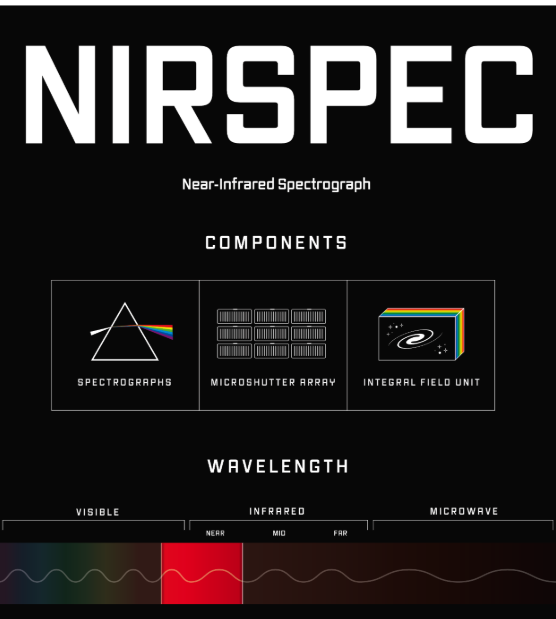
About NIRSpec
The Near-Infrared Spectrograph (NIRSpec) on JWST operates from 0.6 to 5.3 microns, covering visible through near-infrared wavelengths. Its versatile observing modes enable everything from single-target high-resolution spectroscopy to massive multi-object surveys of the early universe.